
FAQs
Frequently Asked Questions
I or my child are starting out on a scooter, what is the best scooter choice for someone who is a beginner?
The most important thing is that the person can control their scooter. For younger riders, it's best to choose a lighter scooter. This makes it easier to control and learn tricks.
What is the difference between a pro scooter (Pro Scooter) compared to a standard scooter?
The Pro Scooter is built to withstand knocks and deliver optimal performance day after day while being safe to ride.
Which brand of scooter should I buy?
The brands we carry are the best available on the market. We've tested them and can confirm that their popularity among young people is a matter of personal taste or simply their appeal. Some brands have a higher profile than others.
Do you want to buy a complete scooter (Completes) or build your own custom professional scooter (Custom)?
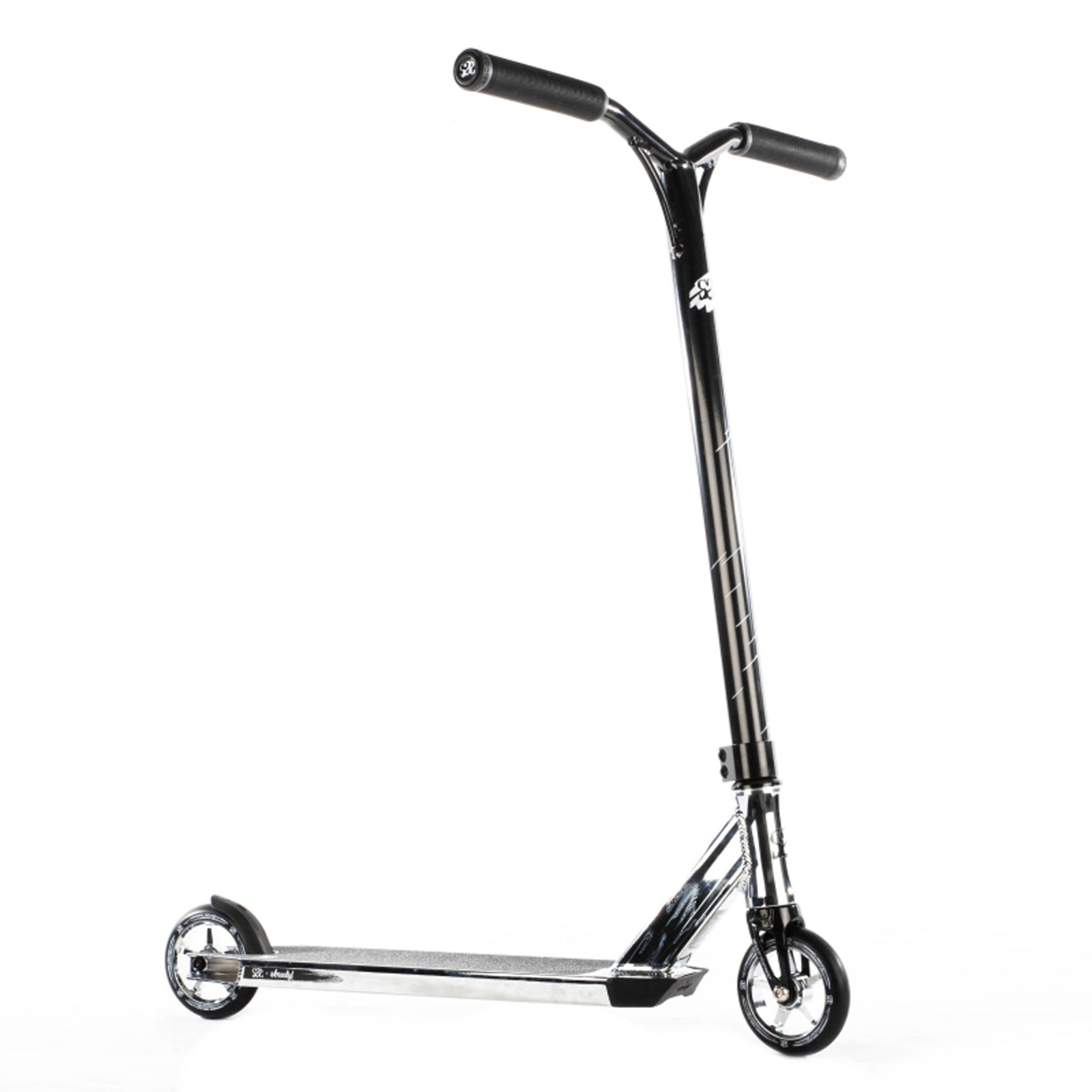
Many manufacturers offer ready-to-ride scooters (complete scooters), often referred to as "complete". The only assembly required is attaching the handlebars to the fork with the clamp.
You can definitely build your own scooter, what's called a "custom" scooter. The cool thing about a custom scooter is that there's no other one like yours! But parents, keep in mind that a custom scooter will generally cost two to three times more than a complete one.
What type of use do you intend to make of your scooter? Riding on the street or riding in parks/skateparks?
Younger or beginner riders usually start by riding in the driveway or on the street, but they don't (yet) do many tricks or jumps. This type of riding can be done with any scooter.
However, as riders gain confidence and begin working on tricks and jumps, their demands increase. That's where Scootersk8 comes in!
Larger, more durable wheels, stronger decks and clamps will benefit the rider who wants to improve.
Street riders who stay away from parks and perform most of their tricks and jumps in various locations like parking lots, schools, and open spaces experience significantly more impact. Therefore, they need larger, more robust scooters. Conversely, park riders will want a lighter scooter to improve their jumps and tricks.
What type and size of scooter parts should I get?
Younger riders won't perform the same tricks and jumps as older, more experienced riders, so larger, heavier scooters won't be necessary for this younger clientele. Shorter handlebars, 100mm wheels, and a smaller deck are all that's needed.
Intermediate, teenage and taller riders will opt for 110mm wheels, a higher and wider handlebar and a slightly larger deck.
Taller and more aggressive riders will want large wheels, a large deck, and oversized T-bars. These scooters are built to withstand impacts.
At what age can my child start freestyle scootering?
Most children can start learning to ride a freestyle scooter around 5–6 years old, provided they have the balance and coordination needed to ride a two-wheeled scooter and have the correct size equipment. Some brands make mini freestyle scooters specifically for riders as young as 4.
Can my child use a freestyle scooter to go to school?
Freestyle scooters are designed for tricks and skateparks, not for commuting. Their small, hard wheels and lack of suspension make them uncomfortable for long distances, and they struggle on rough pavement. If your child needs a scooter for both commuting and tricks, you might consider getting two separate scooters.
My child wants to build a custom scooter. Should I let him/her do it?
For a first scooter, we highly recommend buying a complete (pre-assembled) one. Custom builds require knowledge of parts compatibility (compression systems, fork types, bar sizes, headset standards) which takes time to master. Once your child has ridden for a while and understands what they like and don't like about their current setup, they'll be ready to explore custom builds as the next fun step.
What is the difference between IHC, HIC and SCS compression?
These are the three systems that hold the handlebars, fork, and headset together. IHC (Internal Hidden Compression) is the most common and lightest—great for most riders. HIC (Hidden Internal Compression) uses a shim and is compatible with standard-sized bars. SCS (Standard Compression System) is the strongest and heaviest, often used by advanced street-style riders. For your first scooter, you don't need to worry about this—every complete scooter comes with a compression system already matched.